

Order gin online
Order different types of gin from Drinkology
The whole world of gin
Gin has become an indispensable part of modern bars and continues to inspire with new styles and ideas. The basis is a high-quality neutral alcohol, which is refined with juniper berries and selected botanicals such as citrus zest, herbs, and spices. This results in classic styles such as London Dry Gin, modern craft varieties, sweet gin such as Old Tom, and fruity sloe gin made from sloe berries. In our shop, you will find international classics, Dutch gin or genever, and many other types of gin from all over the world for every occasion. Take your time to browse and order your new favorite gin conveniently online at Drinkology.


Gin Mare Miniature 0.05L 42.7% Mediterranean Gin If you're not a gin connoisseur, you probably don't associate Spain with gin. But once you look into the subject, it quickly becomes clear that Gin Mare is a very popular gin, especially among beginners. It is produced in Vilanova, which borders Barcelona directly. In a direct comparison with a Nordic gin, the differences are very clear. With its dry and spirited aroma, Gin Mare embodies its country of origin through and through. When tasting Gin Mare, you almost feel like you're in a small herb garden. You might not believe it, but the notes of olives, rosemary and thyme in this Spanish gin complement the otherwise very typical juniper notes. However, each bottle is unique because the main ingredient, the Arbequina olive, has a different acidity level in every season. So you have to let yourself be taken on a new journey every time. In addition to the spicy aromas of olives and Mediterranean herbs, other ingredients from the Mediterranean coast are also used in Gin Mare. The taste also has clear notes of juicy oranges from Valencia, lemons from Seville or even cardamom and coriander.
Content: 0.05 Liter (€145.00 / 1 Liter)*

An Dulaman Santa Ana Armada Strength Gin 0.5L 57% Sliabhliag Distillers The small town of Donegal is often seen as a place in itself and so the products of the Sliabhliag Distillers speak for themselves and embody spirits that are made according to recipes with strong local influences. With a tradition rich in over 175 years, the company has already experienced a lot and therefore also has a lot to tell or pass on. With each individual product, the company commemorates a particularly historical event, legend or folk tale. The focus was on reviving a smoky whisky with strong Irish influences. Recently, however, the company has also ventured into the gin industry. This is how the An Dulaman Santa Ana Armada Strenght Gin was born. It is the first gin to be distilled in County Donegal in the An Dúlamán Gin Distillery. An Dulaman Santa Ana Armanda Strength Gin The region is characterized by a wonderful coastline. It is therefore only natural that people here make a living from collecting and selling algae. This tradition can also be found in the name of the brand. Dulaman is the name of an old folk song about a conversation between two old algae collectors. As you can imagine, some of these algae are very popular and you could make a good living from selling them. Of course, this work also had its drawbacks, steep coastlines and a wild Atlantic Ocean, as many collectors fell victim to the wild nature. An Dulaman Gin was created to commemorate these people, who were often found along the coasts. The aforementioned algae, five locally harvested varieties, are also used in An Dulaman Gin and give it its very special umami taste. The Navy Strength is another very special bottling, which was stored in old Roja wine barrels after distillation.
Content: 0.5 Liter (€99.50 / 1 Liter)*
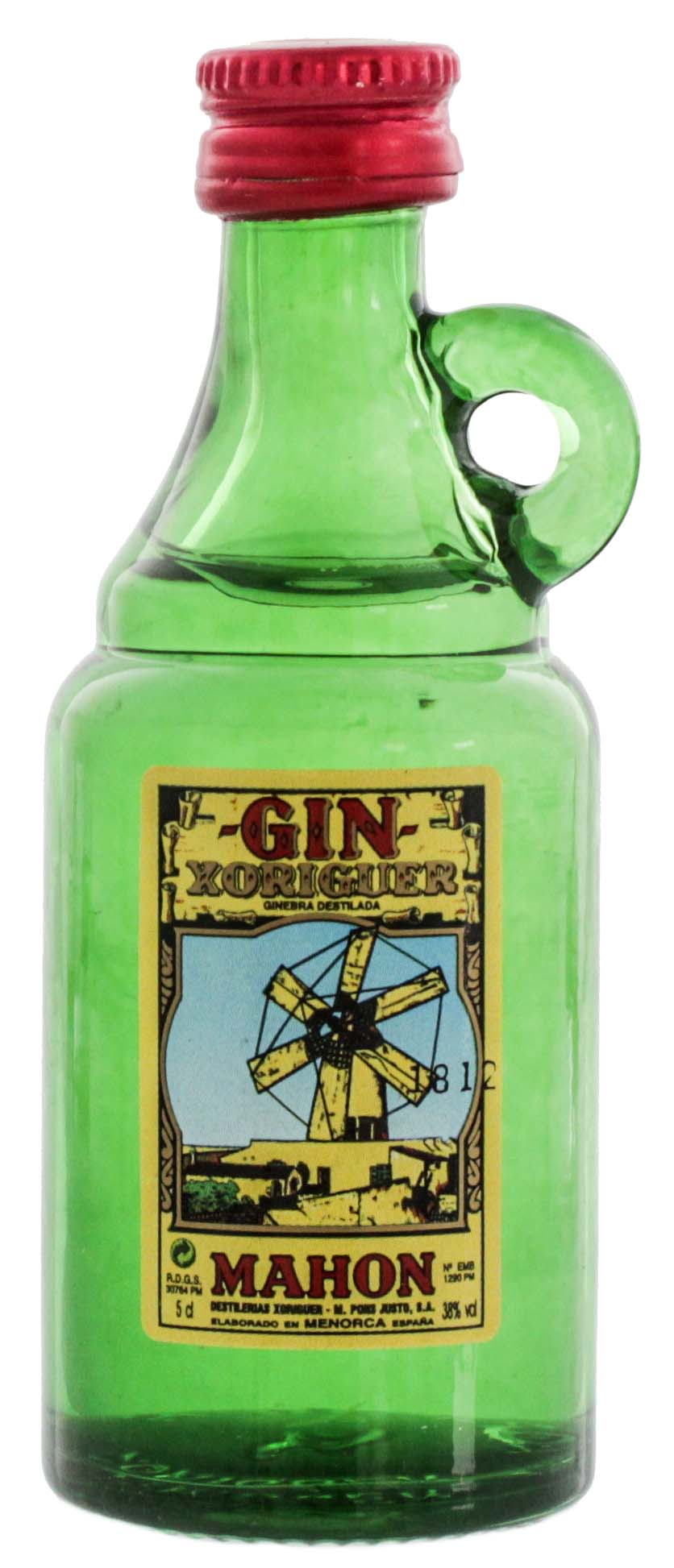
Xoriguer Gin Mahon Miniature 0.05L 38% The national drink of Menorca Anyone who has ever visited the Spanish holiday island of Menorca will know that you can't avoid this typical Menorcan drink. What exactly is this great national drink that everyone is talking about? Gin! Gin? That is certainly something that one or two people are asking themselves at this point. But you read that correctly. The key word is: British influences. And it quickly becomes clear that gin is not completely out of the question. The history of Menorca Gin goes back to 1708, when British naval officers occupied the island. Of course, they brought a certain supply of the British national drink with them, but this ran out faster than supplies could arrive. Locals on the Balearic island agreed to support the officers and make their own gin locally. Juniper berries were imported from Great Britain, now all that was missing was a base. Since Menorca was heavily involved in wine production, they tried using a wine distillate instead of the usual grain distillate. By adding some local herbs and spices, they managed to create their own gin. This was ultimately so popular that an entire brand, 'Xoriguer', was developed from it. The rights to the name were secured, so that today Xoriguer Gin is the only gin with a designation of origin alongside 'London Dry Gin'! The distillery is still in the hands of the Xoriguer family, who still produce it according to the original recipe from the 18th century. Exactly which spices, herbs or other ingredients are used to refine the wine is still a well-kept family secret. Menorcan taste The presentation in traditional jug-like bottles alone gives one hope of Balearic flair. And it really has a lot to offer: it is a tangy, fresh gin, which is surprisingly restrained with fruity notes. A piquant, very unique spice can be discovered. For the comparatively little fruitiness, there are clearly floral notes of violets. It always seems fresh with woody notes, which probably come from being stored in oak barrels. Everyone is recommended to taste this very own gin neat first, because with its multifaceted and mild bouquet it is also very convincing. Of course, with its great aromas it also goes well in cocktails and even in a martini it looks good.
Content: 0.05 Liter (€70.00 / 1 Liter)*

Gustav Metsä Gin 0.5L 43.2% Lignell& Piispanen The distillery is now in its sixth generation and is proud to create the finest quality-tested spirits from Arctic botanicals. The Nordic regions with their fascinating botanicals are always an inspiration for the company. With a company history spanning more than 165 years, we can proudly say that this has always been successful. To this day, it is the third oldest company still in operation in Finland! When Gustav Ranin founded the company in 1852, he imported and sold high-quality whiskeys and cognacs. The oldest products still owned by the family and still available are the Savon Wiina from 1869, the Great Cognac from 1872 and the Honeycomb from 1882. Today the company is focused in a different direction and is responsible for producing the finest spirits itself. With its products, the distillery wants to bring a small piece of Finland to the world. Great importance is attached to transparency and sustainable development. Over the years the company has learned to concentrate on the essentials, on special aromas in which the origin can be recognized. Metsä Gin The name comes from the Finnish word 'Metsä', which means 'forest' in English. The Finnish Gustav Metsä Gin is a real 'forest gin'. Only herbs, berries and spices from the Nordic forests are used in its production. Spruce shoots, rowan berries and birch leaves, to name just a few of the botanicals, are the main ingredients in this Nordic gin, along with pronounced juniper aromas. The floral and spicy notes first appear on the nose. Its full complexity then becomes apparent on the palate. The aromas already identified are joined by other herbs, cardamom and a refreshing note of citrus fruits.
Content: 0.5 Liter (€61.00 / 1 Liter)*

Kimerud Navy Strength Gin 0.5L 57% Gin Navy Strength What does that actually mean? This name goes back to the Royal Navy in the 18th century, when it was prescribed that a certain amount of gin had to be on board every ship. At that time, gin was considered a cure-all for many illnesses and ailments. As demand grew, however, naval officers began to suspect that their suppliers were selling them botched gin. They began to subject the gin to a simple test: if you poured some gin over the gunpowder stored on the ship and it just started to smoke or didn't ignite at all, you knew that it was diluted gin. Only gin that ignited the gunpowder was 'real' gin and had at least 114 proof. This specification has prevailed to this day and is why it is called Navy Strength Gin. Kimerud Farm The history of the distillery begins in 1785 on the Kimerud farm, which is located west of Oslo in Lier. This location with its clean air and nutrient-rich soil offers perfect conditions for starting the distillery and growing herbs and berries. The Kimerud Navy Strength Gin is dedicated to Jørgen Kristian Has Nilsen, the grandfather of the master distiller at Kimerud. Only regional botanicals that also grow on the Kimerud Farm 1785 in northern Norway are used for Kimerud Gin. In addition to the epic aspect, these also have another important role. Because of the harsh, cold climate in Norway, plants grow much more slowly there than is the case in our latitudes. This gives the plants much more time to grow and develop their full aroma. One of these special 22 herbs/botanicals in Kimerud Gin is the 'Golden Rood'. It is a very old herb and was used a lot in the Viking Age (800-1050 AD).
Content: 0.5 Liter (€59.90 / 1 Liter)*

Bottega Bacur Dry Gin 1.0L 40% Bottega Distillery The Bottega Distillery is an Italian distillery and is best known for its excellent grappa. The distillery's headquarters are located on the old country estate from the 17th century and comprises an impressive 10 hectares of vineyards. The winery is halfway between Venice and the Dolomites. The third generation has been dedicated to the production of fine spirits there. It was founded in 1977 by Rosina Zambo Bottega and her husband Aldo Bottega. Ecological sustainability is one of the most important points of the company's outstanding philosophy. Other important points such as organic farming and the use of renewable energy make the distillery a green company. In addition to grappa, they now also offer gin With the Bottega Bacur Dry Gin, the well-known grappa company is bringing its first gin onto the market. Like all other products from Bottega, Bacur Gin is characterized by its strong character. Flavoring herbs are added to a mixture of alcohol and water over a longer period of time during maceration in order to obtain a fine aroma. Finally, the gin undergoes a double distillation to filter out any unwanted notes that may still be present. The Bacur Gin thus unfolds an impressive bouquet on the nose, including notes of juniper, thyme, lemon zest and sage. On the palate, the gin then shows its full aroma. Full of character and very multifaceted, the aromas already mentioned are joined by thyme and marjoram, the typical Mediterranean herbs.

Hernö Sipping Gin 2019 0.5L 49.1% Hernö Distillery When the founder of the Hernö Distillery, Jon Hillgren, moved to London in 1999 and earned his money there as a bartender, his attention to the drink for which the English were so famous grew. He quickly became particularly enthusiastic about balanced and very special gins. Hillgren continued to work with gin outside of everyday bar life, too; he was interested in gin production and took part in workshops. He also took scientific studies and techniques from major manufacturers to heart. During this time, Jon acquired a lot of knowledge and the craft of gin production. When he returned to his home in northern Sweden in 2011, he founded the Hernö Distillery. With the new foundation he also earned himself the title of 'northernmost distillery in the world', as the distillery is located in the small town of Dala in the High Coast region in the far north of Sweden. Sipping Gin The idea behind the Sipping Gin series was to contribute to a stronger visitor industry as a local company. The first editions at the Hernö Open House, as well as the High Coast Whisky Festival and the exclusive first order options for the special editions, the aim was to increase the attractiveness of the gin. For the Sipping Gin No. 1.3. ex Ardbeg Cask, the gin was stored for 21 days in old whisky barrels that were previously used by Ardbeg. Master Distiller Jon Hillgren himself says that this bottling is the 'most powerful' in this series so far. When tasting, the first thing you notice is the characteristic Hernö taste, but then the influences of the barrel storage become apparent: peat, oak and smoke aromas have been transferred into the gin. Its taste is convincing with smoke aromas and a fine scent of caramel and fresh coffee. Vanilla and fresh citrus notes are present in the background and offer an unforgettable experience. It's always worth being quick with the special limited editions from the Hernö distillery, because as is often the case with Hernö, the focus was initially on sales at the High Coast Whisky Festival and at Hernö Gin's Open House in Dala. Only a few bottles are now available for public sale.
Content: 0.5 Liter (€239.90 / 1 Liter)*

Harahorn Pink Gin 0.5L 40% Harahorn stands for Norway pure. In the small distillery, only around 300 liters of the fine distillates are produced at a time. This means that there is a constant overview of production and a consistently high quality can be delivered. Only berries and herbs from Norwegian nature are used to make Harahorn Gin, because these are supposed to play the main role. The gin owes its name to two important things. Firstly, it is a mountain in Hemsedalen. Secondly, it was named after a mythical creature, the Harahorn, a horned hare, thus clearly showing once again that Harahorn stands for Norway. Harahorn Pink Gin is naturally based on the already well-known Harahorn Gin. This is refined with an extract of premium raspberries and fresh lemon juice. You should try this pink gin neat. However, it is of course also suitable for a gin and tonic, although it is recommended to reduce the amount of tonic water by 15-20%!
Content: 0.5 Liter (€45.90 / 1 Liter)*

Edgerton Original Pink Dry Gin 1.0L 43% In cooperation between Dr. Stuart and Martin Edgerton Gill, Edgerton Pink Gin was created in such a way that the end product combines the tradition of gin with modern toughness. Gill noticed early on that an excellent gin is not just about the aromas, color can also play an important role. This is how Gill came to create his first colored gin, the 'London No. 1 Blue Gin". Now another coloured variant follows with the Pink Gin. The Edgerton Pink Gin has a certain uniqueness with its appearance. The pink gin immediately catches your eye and draws attention to itself, and so the product advertises itself. When it came to the colour, however, care was taken not to add any artificial colouring, but to rely entirely on natural products. During development, Gill drew on his skills in tea making, which made him one of the first to make herbal teas in the 1980s. Aroma and taste: Classic notes are retained and complemented by a refreshing sophistication. In terms of taste, the Edgerton Pink Gin has managed to create the optimal balance between modern and well-known botanicals. In addition to the expected aromas, there is also a pleasant exotic fruitiness, which makes the gin invigorating and has a really refreshing effect.

Kyrö Napue 48 Finnish Rye Gin 0.5L 48% Kyrö Distillery The distillery has its origins, as one would expect, during one of the countless sauna sessions of the five Finnish friends Miika, Mikko, Miko, Jouni and Kalle. In 2012 they decided to open a distillery and found the perfect property for their project in an old dairy. It is located not far from the small town of Napue, which also gave the friends' first gin its name. Kyrö Napue 48 Finnish Rye Gin This Finnish gin is based on rye distillate. This has been refined only with local botanicals and reflects the Finnish flair. Sea buckthorn, birch leaves, meadowsweet and cranberries are just a few of the important Scandinavian berries and herbs. They are intended to offer a drinking experience that reminds one of a misty Finnish meadow covered in morning dew. Tasting Notes: Herbs as well as sweet essential oils of meadowsweet and subtle citrus fruits can be recognized on the nose. On the palate, the Kyrö Napue 48 Finnish Rye Gin shows its refreshing, cool and herbal side. Notes of menthol and leaves emerge. The spicy aroma of the rye also comes through here. Its many awards have already shown that the Kyrö Napue Gin also keeps its promises. The gin is perfect for a gin and tonic, as the award for 'Best Gin in the World for Gin & Tonic' in 2015 shows. But Kyrö Gin is also a delight when drunk neat!
Content: 0.5 Liter (€71.00 / 1 Liter)*

Cape Fynbos Gin Miniature 0.05L 45%
Content: 0.05 Liter (€99.00 / 1 Liter)*

Hapusa Himalayan Dry Gin 0.7L 43% Indian Gin India is probably the last country that people associate with gin. This is probably also because in the country itself gin is still seen as a grandma's drink. In western countries the spirit drink has long since managed to avoid this image. The founder of Nao Spirits, Anand Virmani, hopes that gin will soon be seen as a hipster classic in India too. That will not be easy, as the Indian drinks industry is very much dominated by beer and dark spirits. In 2015, Virmani and his co-founder dared to take this path and so they founded a bar in New Belhi called Perch. However, their idea did not get very far in the industry, as people here tend to be more interested in mass production. They quickly realised that if they wanted to keep their vision alive, they would have to become distillers themselves. So they bought a copper pot and started experimenting with various herbs, fruits and spices. Their path to their goal was not easy, and they had to seek help from the industry in the meantime. The result is impressive, however: two recipes have been refined. The first was a modern classic, with well-known botanicals. Juniper was the focus here, together with orange. The second recipe was for Hapusa Gin. Hapusa Gin - Juniper Gin At the start of their experiments, the duo quickly noticed that, although there are many 'Indian' gins among the mass of gins, they have very little to do with the country itself. It was strange that the country, which prides itself on its plants and its thousands of spices, did not have a single gin with these very same ingredients on the world market. With Hapusa Gin they have finally provided the answer to this gap. For their India Gin the two use the finest juniper from the Himalayas. The remaining botanicals such as turmeric, mango, ginger, cardamom, Gondhoraj lime and almonds also all come from India and are hand-picked. You will find these herbs, spices and fruits in every Indian kitchen. So Hapusa Gin is an absolute representative of its homeland! Tasting: When you open the bottle you immediately feel like you are in the mountains of the Himalayas. Juniper hits the nose and aromatic pine aromas waft towards you. Since Hapusa means juniper, it is not surprising that this is the focus here. In terms of taste, the woody, juniper aromas are also at the forefront. But the other great aromas are not neglected either. Clear citrus aromas and spicy notes of turmeric, ginger and cardamom also come in stylishly. The cardamom also gives the finish a distinct piquant note. Overall, a very spicy, aromatic taste!
Content: 0.7 Liter (€49.29 / 1 Liter)*

Red Door Gin 0.7L 45% Small Batch Highland Gin Gin from Scotland? Yes, you read that correctly. Quite unusual for a country that is actually dominated by whisky, gin from the Highlands has recently become available. For over 120 years, the emphasis in spirits production there has been on great attention to detail and good quality. But now it is time to take a new path. The aim was to capture the spirit of Scotland's majestic mountains and windswept coasts in a gin. In terms of taste, the Red Door Gin is elegant and simply well balanced. It offers unmistakable juniper notes, rounded off by citrus and interesting sea buckthorn notes. A few other interesting aromas can be detected in the background: floral notes of heather and chocolatey, smoky rowan berries. All in all, this is a gin that is more on the fruity-floral side, but convinces with very interesting, unusual flavor combinations!
Content: 0.7 Liter (€32.14 / 1 Liter)*

Tanqueray Gin Malacca 1.0L 41.3% If you are a company in the world of spirits, you often have to come up with something special to surprise your customers. In most cases, you rely on special editions, special bottlings for just a few countries, or even one-off bottlings. In the case of Tanqueray Gin Malacca, that was exactly the case. At the end of the 90s, Tanqueray Malacca was the company's first new gin recipe, which was still based on a recipe from the founder. Its era was not to last long, however, as it was taken off the market in 2001. But the wave of demand for Malacca did not stop, and so it was decided to revive a new edition of the 'Special Edition' in 2012/2013. Here too, the shelf life on the shelves did not last too long and again the demand for Tanqueray Gin Malacca was so immense that another edition was brought onto the market in 2018. In contrast to the previous editions, which were in the style of Old Tom Gin, the 2018 edition is this time a London Dry Gin. Both aim to offer a more fruity, sweet alternative to the rather dry gin for which Tanqueray is known. The aromatic citrus notes are in the spotlight here. On the nose, there is clear freshness of lime, grapefruit and orange. Juniper stays in the background together with fine spices and a hint of cinnamon. These fresh aromas are also clearly evident in the taste, with aromas of lime and grapefruit in particular. Notes of fine juniper and pine also resonate. The finish is long-lasting and characterized by fruity and juicy spicy notes.

Elg Gin No. 0 - 0.5L 47.2% The name of the gin is the Danish word for 'elk' and is also the nickname of the master distiller Elsner. Each bottle is personally signed by him and once again clearly shows the attention to detail that goes into Elg. No. 0 Gin. The Elg No. 0 Gin speaks for itself. It is the very first gin that Henrik Elsner, master distiller, released in 2015. Not only is this the distillery's original gin and only produced in a small batch process of around 1,250 bottles, but only three different botanicals are used as flavoring components. Anyone who is familiar with the production of gin will know that significantly more botanicals are normally used here. Elg. No. 0 only needs three: juniper, coriander and carrot. The carrots come from a nursery on the Danish island of Funen. There they are harvested only once a year, in July, and processed within 24 hours into the finest carrot distillate. Due to the numerous chemical compounds in a carrot, this distillate has the best conditions to combine the terpenes from the coriander seeds and the juniper berries.
Content: 0.5 Liter (€59.60 / 1 Liter)*

Elg Gin No. 4 Miniature 0.05L 46.5% Like ELG No. 0 or No.1, ELG No. 4 is based on gin made from juniper berries, coriander seeds and carrots. Like the distillate used to make the base gin, which contains carrots from the Danish nursery Gärtnerei Toftelund, ELG No. 4 also contains an extract of black carrots. This is what gives it its special purple color. To make the black carrot extract, the carrots are placed in 50% alcohol immediately after delivery, which then gradually absorbs the carrots' purple pigments. As water is also extracted from the carrots during this process, the alcohol content is also reduced. After a week, the carrots are sieved and the purple extract is obtained. This now has an alcohol content of 38% and a wealth of aromas. ELG No. No. 4 is of course best enjoyed with tonic water and a little ice. A little variety can also be found by mixing No. 4 with a vermouth for a dry vermouth. If you are perhaps a little put off by this special gin and don't want to invest in a large bottle straight away, the purple ELG No. 4 Gin is available as a miniature version with a filling quantity of 0.05L, as shown here.
Content: 0.05 Liter (€110.00 / 1 Liter)*

Elg Gin No. 0 Miniature 0.05L 47.2% Stone Grange Distillery A fairly young distillery, founded in 2009 in Fredensborg on Lake Esrom, where the company's own lands extend to the lake. Over the years, the company has tried many things, producing brandy as well as aquavit and absinthe. Today, however, the focus is on the production of gin. Master distiller Henrik Elsner is responsible for production at the distillery. When the decision was made to produce gin, it was decided to make it from just three botanicals in order to gain a foothold in the broad gin market and to impress with a very special juniper brandy. The company also wanted to produce a gin in which none of the botanicals stood out so much, but rather one that was characterized by a particularly good balance. To date, there are six different gins, all based on ELG No. 0. Compound Gin ELG Gins are so-called compound gins. This means that each botanical is distilled separately before it is mixed with the base alcohol made from wheat. However, the three botanicals are also treated differently in order to obtain 100% of the best taste from each individual component. Coriander seeds, for example, contain many 'disturbing' taste components that are lost during distillation.
Content: 0.05 Liter (€85.00 / 1 Liter)*

Brooklyn Gin 0.7L 40% USA Gin At the end of the 19th century there was already a distillery with a similar name, the Brooklyn Distilling Company, but it was closed again around 1900. So this new Brooklyn Gin is not to be confused with it!!! Behind the modern company are two young men who once belonged to one of the largest industrial alcohol producers in the United States. They now want to devote themselves to artisanal production and away from industrial mass production. So the company was only founded in 2010 by Emil Jättne and Joe Santos. Since it happened at a time of economic crisis, they could not afford to build their own distillery and so Brooklyn Gin is now produced in the Warwick Valley Winery and Distillery in Warwick, New York. The amount of gin that the company produces was intentionally kept small. Because of their values of doing everything by hand, they have no other choice. Each batch only produces around 300 bottles of Brooklyn Gin. Special features of Brooklyn Gin Brooklyn Gin is made using only fresh peels from various citrus fruits, including Eureka lemons, Persian lemons, Mexican lemons, kumquats and navel oranges, as well as hand-picked juniper, lavender and cocoa beans. The two founders try to source their ingredients as locally as possible. The botanicals are turned into gin together with a base alcohol made from 100% American corn. The aim of these high-quality ingredients is to achieve a more intense aroma than is the case when using frozen fruit, as the fruits and berries are also chopped by hand.
Content: 0.7 Liter (€63.93 / 1 Liter)*

Gordon's Dry Gin Miniature 0.05L 37.5% The 250-year-old distillery still produces excellent gin today. With great attention to detail and the finest ingredients, Alexander Gordon began creating a gin with a very high juniper content in his London distillery in the Southwark district in 1769. The district itself was also an important location for Gordon, as it was known for its excellent, clean water, which was needed as a base for the alcohol. A good twenty years after the company was founded, the company moved to Goswell Road in Clerkenwell. Even today, Gordon's Gin is still produced under license in the Scottish Cameronbridge distillery and at other locations worldwide. From the 19th century, Gordon's Gin also supplied the Royal Navy. In the early 19th century, the company quickly became a purveyor to the Royals, including King George V and the Prince of Wales, as well as Queen Elizabeth II and her mother, Queen Mum. Gordon's Gin has always stood for an expressive juniper taste and is very popular with gin lovers. It is ideal for a fine gin and tonic, with a wedge of lime or in a cocktail.
Content: 0.05 Liter (€39.00 / 1 Liter)*

Gin Pitsch Düsseldorf Dry Gin 0.7L 44% Gin Pitsch – A Düsseldorf Dry Gin Pink Gin is the younger brother of the legendary herbal liqueur Killepitsch, which comes from the Peter Busch liqueur factory, founded in 1858. Behind the Rhenish factory there is a truly funny story about two old friends. The basic idea came during one of the two's many conversations. When the two friends Willi Busch and Hans Müller- Schlösser once sought shelter in an air raid shelter when bombs were flying outside and the noise from outside was really frightening, Hans said to Willi: If it happens again, they'll kill us too". But not Willi, before the two of us have had another tasty treat", replied Willi, which was probably meant more as a joke. Shortly after that night, Hans Müller, who was already working as an innkeeper at the time, set about developing his own fine herbal liqueur that would be remembered forever. At the end of his development phase, he introduced Killepitsch, which was made from a double-filtered alcohol. Word quickly spread throughout the Rhineland about what a fine herbal liqueur had been created, and it wasn't long before it conquered the whole of Germany. Now for the new Düsseldorf gin: It is therefore only natural that some botanicals from Killepitsch have also found their way into Pink Gin...it is known that 18 herbs and spices are used in gin, a few well-known ones include juniper and citrus fruits. It impresses with its very soft and mild taste. The design of the Gin Pitch bottle also shows where this fine juniper schnapps comes from. Pictured here is the impressive skyline of Düsseldorf. So if you are already a fan of Killepitch, you shouldn't miss out on trying this new creation from the product portfolio of the Peter Busch liqueur factory. But this new, exceptional gin is also highly recommended to all other gin lovers!
Content: 0.7 Liter (€45.64 / 1 Liter)*

Cubical Gin Special Distilled Mango 0.7L 37.5% In addition to England, Spain has also dedicated itself to gin production and has already established one or two top gins on the market. It is all the more pleasing when there is a co-production between the two countries: Cubical Gin. The production of this premium gin is the responsibility of two companies: the base alcohol for Cubical Gin is produced in the Langley Distillery in Birmingham, and the fusion with the various botanicals then takes place in the Bodegas Williams & Humbert, whose roots lie in England but whose headquarters are in Spain. After the company Bodega Williams & Humbert had already celebrated great success with Cubical Premium and Cubical Ultra Premium as well as Cubical Kiss from the Langley Distillery in Birmingham, with the special aroma of Buddha's hand, they have now brought a new, fruity gin onto the market. This is a flavoured gin that consists of the base of Cubical Gin and has been combined with the fruity aroma of mango. Cubical Mango is a very aromatic, soft and above all light gin with a very well balanced taste.
Content: 0.7 Liter (€42.14 / 1 Liter)*

The Botanist Islay Dry Gin Miniature 0.05L 46% The Bruichladdich Distillery Co. Ltd. Scotland's westernmost distillery is known among connoisseurs above all for its outstanding whisky. The distillery was founded in 1881 by the brothers John Gourlay and Robert William Harvey. It is located not far from Loch Indaal, on the very pristine island of Islay. The distillery has been part of the Remy Cointreau Group since 2012.But now they have taken another path to produce an excellent gin. This is produced carefully and only in small batches. Botanist The base of this gin also consists of the usual botanicals for a gin such as juniper, coriander seeds or cinnamon bark. However, it is only after the addition of 22 wild botanicals that come from the Islay island and have their own character that it becomes a special Isaly Gin. The gentle processing in the pot still method allows the maximum aroma to be extracted from the fine botanicals. On the nose, there is a slight sweetness with notes of apple mint. The juniper is also clearly in the foreground here. This combination makes the Botanist Gin seem very summery. The taste is very special, very clear on the palate and with great aromas. Fine citrus notes that have been perfectly matched with the juniper are evident here. The finish is long and soft and offers a slightly maritime touch.
Content: 0.05 Liter (€130.00 / 1 Liter)*

Monkey 47 Black Forest Dry Gin Miniature 0.05L 47%
Content: 0.05 Liter (€130.00 / 1 Liter)*

Hendrick's Gin 1.75L 41.4%
Content: 1.75 Liter (€51.40 / 1 Liter)*
What exactly is gin?
Gin is a flavored spirit based on neutral alcohol. Its characteristic profile comes from juniper berries and additional botanicals. To help you keep track when buying gin online and comparing different styles, the most important features are summarized below.
Quick overview of gin characteristics:
Alcohol content
In the European Union, gin must contain at least 37.5% alcohol by volume. Many well-known gins are bottled at around 40%, while stronger expressions can be significantly higher. A higher alcohol content can add more depth and aroma in cocktails.
Flavor and aromas
Juniper is always at the center. Depending on the recipe, it is accompanied by citrus notes, herbs, spices, or floral nuances. The spectrum ranges from crisp and dry to noticeably sweeter gin styles with a softer texture.
Botanicals
Botanicals are the plant-based ingredients that give gin its aroma. Typical botanicals include juniper, coriander, angelica root, cinnamon bark, pepper, lavender, citrus fruits, and orange peel. Many producers also use regional herbs or unusual ingredients, creating distinctive and unique gin styles.
Color
Most gins are clear. Barrel-aged expressions can take on golden or amber tones. Sloe gin and other blackthorn-based gins often show an intense red color and are among the popular sweeter gin varieties.
Origin
The origins of gin can be traced back to the Netherlands in the 17th century, where genever was used as a medicinal spirit. Genever was made with juniper berries, which are the fruit of the juniper plant. In the 18th century, “gin” made its way to England. It was inexpensive and widely produced due to its relatively simple manufacturing process, which led to its rapid spread. Over time, gin became a globally popular spirit. Today, gin is produced worldwide. In addition to the Netherlands, classic centers include Great Britain and Belgium, as well as many modern distilleries in Germany, Spain, Scandinavia, Japan, and numerous other countries.
Use
Gin is often enjoyed neat, over ice, or in long drinks and cocktails. Well-known examples include the Gin & Tonic, Martini, Negroni, Tom Collins, as well as drinks based on Old Tom and sloe gin. If you want to order gin online, you can also browse our matching recipes for inspiration.
How is gin made?
The production of gin begins with a neutral-tasting base spirit. This is usually made from grain, but it can also be derived from other agricultural raw materials. Juniper berries and additional botanicals are then introduced to create gin’s characteristic aroma.
Typical steps in gin production
-
Maceration
The botanicals are crushed and steeped in the alcohol. During this time, the aromas dissolve and are absorbed by the spirit. The aromatic base is then redistilled, filtered, and diluted with water to reach bottling strength. -
Digestion
Similar to maceration, but with gentle heating. The botanicals are steeped in alcohol and warmed at a moderate temperature. This allows essential oils to dissolve more quickly, making this method especially suitable for roots and woods. -
Vapor infusion or percolation
Alcohol vapor passes through an aroma basket filled with botanicals. The flavors are extracted in a particularly gentle way. The result is often very clean, fresh, and elegant gin profiles.

Many distilleries combine different methods to achieve a distinctive character. After distillation, the gin is diluted with water to reach the desired bottling strength. For aged gin, this is followed by maturation in wooden barrels. For sloe gin or other sweet styles, sloe berries and sugar are added, resulting in a noticeably sweeter gin profile.
What types of gin are there?
Anyone looking to buy gin is quickly faced with the question of which style is the right choice. The sheer variety of gin styles available today can make classification challenging. However, the following styles are generally considered classic.
London Dry Gin
A classic dry gin with a clear juniper and citrus profile. No sugar may be added, and all flavors must be introduced during distillation. Ideal for gin & tonic and many other cocktails.

Hammer London Dry Gin 1.0L 40% England's tradition visits Oslo Hammer London Dry Gin, which at first glance seems almost inconspicuous, was distilled near the Norwegian capital Oslo. The mineral-rich water from the Hadeland springs was used, whose rocky landscape is, according to research, around 300 million years old. A double pot still distillation and a special filter technology are the decisive factors in bringing the delicious aromas of the botanicals used into Hammer London Dry Gin. The finest spices and herbs are selected with great care to perfect the gin. The individual ingredients for the aromas are not added afterwards, but during distillation, thus creating the unmistakable character. The recipe for London Dry Gin comes from England and can be traced back to 1776. It later made its way to the Scandinavian country via a roundabout route and has enjoyed great popularity ever since. The play of aromas The first scent is a strong hint of ripe juniper berries, the classic ingredient in gin. The combination of different ingredients, which are either dried or provide a refreshing kick, is striking. The notes of fine herbs play around the nose in a skilful manner. On the palate, a real firework of intense fruit aromas is revealed, as orange and lemon are paired together here. The fine sweetness of the juniper berries and the spiciness of the herbs create an unforgettable drinking experience. On the finish, you can feel a pleasant warmth that lasts a long time. Meanwhile, nutty and rich tones blossom and delight the connoisseur. The secret home The Hammer London Dry Gin is not a gin that you drink neat or on ice, for example. Rather, it likes to present its unique strength and special character in a freshly made cocktail or long drink. Combined with the classic tonic and vermouth, it shows its diversity and expressiveness. As an absolute classic for mixed drinks, this gin should not be missing from any well-stocked home bar.

Tanqueray London Dry Gin This world-famous gin is made according to an old recipe by Charles Tanqueray from the finest grain, the best water and selected botanicals in a fourfold distillation process. Tanqueray Gin has been named the best gin in the world several times in its history at various competitions. The distinctive bottle shape of the Tanqueray probably goes back to old English fire hydrants or historical cocktail shakers. The gin impresses on the nose with its fine spiciness. On the palate it is very complex and tangy. The aftertaste is very delicate and long. This bottling contains the alcohol strength of 43.1%, which is highly valued by bartenders.
Content: 0.7 Liter (€28.50 / 1 Liter)*
Modern Dry Gin and New Western Gin
In these styles, juniper takes more of a back seat. Other botanicals such as cucumber, rose petals, tea, or regional herbs are allowed to shine. This category is perfect for anyone looking to discover distinctive and contemporary gin styles.

987 Nueveochosiete London Dry Gin 0.7L 40% 987 Spirits Drinks All botanicals used for this gin come from the region around El Bierzo. The distillery keeps some of the 14 botanicals secret, but those that are known include vanilla pods, thyme, bitter chamomile and Mencía wine. These are macerated in a distillate that comes from one of the best distilleries in London. Herbs and fruits are distilled twice separately. This creates a perfectly balanced symphony of clear juniper notes, fresh herbs and fruits. On the palate it is soft and creamy, almost a little oily at the beginning. The aroma of fresh juniper is clearly evident here, along with the aromas of herbs and the aroma of Mencía wine.
Content: 0.7 Liter (€36.43 / 1 Liter)*

Cubical Ultra Premium London Dry Gin 0.7L 45% A cube of gin The Birmingham Langley Distillery produces the base alcohol for Cubical Gin. It is distilled four times and made from the finest English grain. In addition to juniper, lily root powder, liquorice root and cassia tree, Buddha's hand was also used as flavoring botanicals, to name just a few of the extraordinary herbs. The combination of the base alcohol with the herbs and spices takes place in the famous wine cellar 'Bodega Williams & Humbert' in Spain, which is mainly known for its good sherry and wine. The gin is produced using a traditional British process in distillation equipment that is over a hundred years old. A special ingredient - Buddha's hand A main ingredient in all Cubical Gins is the citrus fruit Buddha's hand. The main growing areas are southern China and India. It is very aromatic, rich in essential oils and, in contrast to most other citrus fruits, less bitter. The fruit can be recognized by its unusual shape. It is divided into finger-like sections. Buddha's hand is often used as an offering in Buddhism. Tradition has it that Buddha himself preferred a closed citrus fruit because it more resembled a closed prayer hand. The design With a rather unusual and elegant design, the Cubical Gin stands out from the crowd with its bottle design and indicates the innovative spirit behind the three gins. The exterior immediately indicates the extravagant contents. The taste The nose is dominated by the fresh, fruity aromas of orange peel and Buddha's hand, then the spicy and earthy herbs and roots come through. As you might expect, the citrus notes come through more on the palate, but they are also subtly accompanied by juniper, liquorice and cassia. The alcohol is only slightly noticeable here, as the Ultra Premium Gin only has 45% ABV. This fruity gin is best served as the main ingredient in a good gin and tonic.
Content: 0.7 Liter (€59.64 / 1 Liter)*
Old Tom Gin
Old Tom is considered a classic sweetened gin style. A subtle sweetness and a softer texture make it very approachable. It works beautifully in historic cocktails such as the Tom Collins and Martinez and is an excellent choice for those who prefer a sweeter gin.

Both`s Old Tom Gin 0.7L 47% The history of Old Tom Gin Even though it is only known to a few connoisseurs today, Old Tom Gin was once considered one of the most important spirit categories in the world. Old Tom Gin, also known as Old Tom or just Tom Gin, was particularly popular in England in the 18th and 19th centuries. Old Tom Gin is a descendant of the original genever from the Netherlands and is drier than this, but slightly sweeter than the gin known today. At that time, wooden signs in the shape of cats were attached to pubs, which would serve a gin shot to customers by inserting a penny. Since these bars were called "Old Tom" by the locals, it can be assumed that the name Old Tom Gin comes from them. The mechanism of the Old Toms worked in such a way that the penny that was thrown in rolled to the bartender inside the pub, who then poured the gin into a small tube directly into the consumer's mouth using a funnel. An ingenious but also dangerous business idea, as many alcoholics were able to treat themselves to their drinks in secret. Aside from this questionable pouring method, Old Tom Gin also slowly established itself in the more prestigious bars in England and was finally mentioned for the first time in a cocktail book in 1891. This was the book "The Flowing Bowl: When and What to Drink", in which Old Tom Gin was listed as an ingredient in the Tom Collins cocktail that is still popular today. Over the years, things have unfortunately gone quiet around Old Tom Gin, and it has only been experiencing a small renaissance for around ten years now, due to the increasing interest in bar culture. The production of Both's Old Tom Gin Both's Old Tom Gin is produced and bottled by "The Both Distillery" (founded in 1886) for the spirits retailer Haromex. Both's Old Tom Gin is made according to a historical recipe. The basis is high-quality juniper berries which are macerated together with other botanicals in the best neutral alcohol and then gently distilled. Both's Old Tom Gin is then carefully sweetened and bottled in elegant bottles with a strong 47% ABV. The taste of Both's Old Tom Gin Both's Old Tom Gin has a clear color and a sweet, fruity smell. The taste of Both's Old Tom Gin is smooth, sweet, fruity and convinces with a pleasant juniper note and nuances of rose petals, mint, citrus and anise. Both's Old Tom Gin is best enjoyed neat or in historical cocktails such as Tom Collins, Ramos Fizz or Martinez.
Content: 0.7 Liter (€40.71 / 1 Liter)*

Ransom Old Tom Gin 0.7L 44% This remarkable Old Tom Gin is produced by Ransom Spirits, based in Oregon, USA. The gin is a remake of the "Old Tom" style of gin, which was extremely popular in England in the 18th century.It is a slightly sweetened gin that is the basis of many classic cocktail recipes. Ransom Spirits developed its Old Tom Gin with the help of the famous cocktail historian David Wondrich, who also developed a Curaçao with Cognac Ferrand that was named "Spirit of the Year 2013".In the production of Ransom Old Tom Gin, a malty spice is used, which is also why the subtle malt notes on the nose are due to it. After distillation, various herbs and spices are added to the base for maceration and then distilled in small pot stills and the best fraction of the distillation is bottled. A great Old Tom Gin that is ideal for the Martinez cocktail.
Content: 0.7 Liter (€76.43 / 1 Liter)*
Sloe Gin
Sloe gin is a gin-based liqueur. Sloe berries are steeped in gin together with sugar. The result is an aromatic, ruby-colored, and sweet gin style with pleasantly tart nuances. Popular enjoyed neat, over ice, or in refreshing mixed drinks.

Foxdenton Sloe Gin 0.7L 25% The English Radclyffe family has been producing fruit liqueurs for home use for many generations. When Nicholas Radclyffe took over the family business - Foxdenton Estate Company Ltd. - in 2001, he specialized in the production of gin and gin-based liqueurs.A special highlight in the portfolio is this sloe gin, which is made according to an old family recipe. Made with high-quality sloes, this sloe gin is stronger and at the same time less sweet than comparable products. This has the advantage that the natural sloe aroma is not overpowered by the sugar and the gin also retains its natural aroma. Whether neat on ice, as a long drink with tonic water or bitter lemon or as a "sloegasm" with champagne - this sloe gin is always a pleasure.
Content: 0.7 Liter (€32.14 / 1 Liter)*

Ableforths Bathtub Sloe Gin 0.5L 33.8% Bathtub Gin If you translate 'Bathtub Gin' literally, this gin means 'bathtub gin' and is an allusion to the time of Prohibition in America. During this time, alcohol lovers tried everything possible to get their hands on a fine tipple. In the 1920s, many tried their hand at this field as amateurs. There were many poor quality variants, often consisting of a mixture of cheap wheat distillate and water, to which additional flavors had been added. If the bottles available at the time were too big to be filled under the sink, people would resort to the bathtub tap and often the alcohol was distilled in the bathtub at home. This is how the name 'Bathtub Gin' came about. The Bathtub Sloe Gin by Ableforth is a special edition of the Bathtub Gin. The gin is produced using the cold-compounded distilling process. It is a process that has almost been forgotten. It does not use heat and therefore achieves a much better aromatic fullness. The packaging of each bottle is special: Each bottle is wrapped by hand, tied and dipped in wax. Professor Cornelius Ableforth, who is behind this impressive gin, has selected a number of herbs and spices to combine with the sloes, including coriander, cinnamon, cloves and orange zest. The Bathtub Sloe Gin As soon as you open the bottle you are surprised by an incredibly fruity aroma. In combination with the spices used, the gin creates an association with freshly baked cake. The taste then surprises you with marzipan and juniper aromas. Berries, citrus fruit and vanilla meet oak and tannin to create a harmonious taste. Bathtub Sloe Gin impresses with a spicy and long finish. You should simply enjoy this sloe gin neat, best chilled in summer and warm in winter for a change.
Content: 0.5 Liter (€59.80 / 1 Liter)*
Navy Strength Gin
Gin with a significantly higher alcohol content, often around 57% ABV. Very intense and powerful in cocktails where the gin should remain clearly noticeable.

Plymouth Gin Navy Strength 0.7L 57% Plymouth Gin is a unique type of gin and has a protected designation of origin. It can only be called Plymouth Gin if it was produced in Plymouth, south-west England. The Blackfrias Distillery, where Plymouth Gin is produced, is the oldest gin distillery in the world, operating since 1793. Made from the finest grain and pure water from Dartmoor National Park, this gin is a symbol of English distillery art.The taste of Plymouth Gin Navy Strength reveals a distinct lightness with a subtle fresh juniper note and balanced citrus aromas and a slightly earthy note. The slight sweetening of the gin also creates an excellent complexity and concentration of aromas.Plymouth Gin is elegance. Its smooth taste and fine balance of flavors make it an excellent choice in all kinds of mixed drinks. It is not without reason that it is called Navy Strength.It is tradition that all ships leaving their home port of Plymouth carry a certain amount of this high-proof gin with them. In earlier times, if the gunpowder became damp and the cannons became unusable, the battle readiness could be restored by pouring the 57% gin over it and then lighting it.
Content: 0.7 Liter (€67.07 / 1 Liter)*
Kimerud Navy Strength Gin 0.5L 57% Gin Navy Strength What does that actually mean? This name goes back to the Royal Navy in the 18th century, when it was prescribed that a certain amount of gin had to be on board every ship. At that time, gin was considered a cure-all for many illnesses and ailments. As demand grew, however, naval officers began to suspect that their suppliers were selling them botched gin. They began to subject the gin to a simple test: if you poured some gin over the gunpowder stored on the ship and it just started to smoke or didn't ignite at all, you knew that it was diluted gin. Only gin that ignited the gunpowder was 'real' gin and had at least 114 proof. This specification has prevailed to this day and is why it is called Navy Strength Gin. Kimerud Farm The history of the distillery begins in 1785 on the Kimerud farm, which is located west of Oslo in Lier. This location with its clean air and nutrient-rich soil offers perfect conditions for starting the distillery and growing herbs and berries. The Kimerud Navy Strength Gin is dedicated to Jørgen Kristian Has Nilsen, the grandfather of the master distiller at Kimerud. Only regional botanicals that also grow on the Kimerud Farm 1785 in northern Norway are used for Kimerud Gin. In addition to the epic aspect, these also have another important role. Because of the harsh, cold climate in Norway, plants grow much more slowly there than is the case in our latitudes. This gives the plants much more time to grow and develop their full aroma. One of these special 22 herbs/botanicals in Kimerud Gin is the 'Golden Rood'. It is a very old herb and was used a lot in the Viking Age (800-1050 AD).
Content: 0.5 Liter (€59.90 / 1 Liter)*
Aged Gin
Gin that is matured in wooden barrels, allowing it to develop additional aromas such as vanilla, caramel, and toasted notes. An exciting alternative for fans of whisky or rum.

Nagu Oak Aged Gin 0.5L 47% Finnish Gin Nagu Gin is produced on the southwest coast of Finland. Here, on a small group of islands called Nagu, you will find the small artisan distillery that was founded in 1996. It lay dormant for several years before two childhood friends plucked up the courage to return to their home island and take over the distillery. The small distillery's first 'new' small batch gin left the distillery in 2019, and two new products followed in 2020, the 'Akvavi' and the 'Oak Aged Gin'. The aim is to give the gin a typically Nordic character, so in addition to juniper, rosemary, fennel and spruce shoots are macerated in alcohol for a good 24 hours. The Oak Aged Gin The 'base gin' was used as the basis for the Oak Aged Gin. This then matures for 100 days in New American Oak barrels. This also creates a fine, sweet vanilla aroma and the notes of the oak wood are also transferred to the gin. The color of the gin also changes as it matures in the barrel. Oak Aged Gin is no longer a clear distillate; the gin has a wonderful amber color.
Content: 0.5 Liter (€65.90 / 1 Liter)*

Harahorn Cask Aged Gin 0.5L 41.7% Det Norske Brenneri The production facility of the Det Norske distillery is in Grimstad in southern Norway. After the Norwegian production monopoly was lifted in 2015, the distillery was the first private distillery in Norway. The distillery got off to a great start with its craft gin in 2015. For more than a year, the master distillers experimented with different berries and plants to get what they consider to be the perfect recipe for their craft gin. Since fruits, berries and herbs taste so particularly good in hardly any other place in the world due to the special climate in Norway, Harahorn Gin's contain four regional ingredients from land and sea: juniper from Røros, blueberries from Nordmarka on the outskirts of Oslo, rhubarb from Grimstad and seaweed from the city. Harahorn Hunters and miners have sworn they have seen it for many centuries. In North American folklore, this creature is called the Jackalope. In Norway, it is known as the Harahorn. The classic Harahorn Gin uses juniper berries as well as blueberries, rhubarb, bladderwrack, marjoram and angelica from the Norwegian wilderness. This edition of Harahorn Gin has also been aged for a year in Oloroso sherry casks. This creates a premium gin with smoothness and elegance, specially developed for classic drinks.
Content: 0.5 Liter (€53.00 / 1 Liter)*
Genever (Dutch Gin)
Genever is considered the forerunner of modern gin. It features a pronounced malt character and tends to be grain-forward and softer than many contemporary gins.

Zuidam Oude Genever 5 years, 0.5L 38% Classic spirits and liqueurs from the Netherlands The Dutch distillery Zuidam is one of the few spirits producers in the Netherlands that still produces its products in a very traditional and artisanal way. All products used by Zuidam are 100% natural and carefully selected. Another special feature of the distillery is that it is still family-run. All recipes for the products produced there are developed in collaboration by Fred van Zuidam and his son Patrick. They see their products as a kind of painting, which is painted with aromas instead of colors. Zuidam places just as much emphasis on the packaging as on the quality of the products. For this reason, all products will be bottled in a specially designed and attractive designer bottle. The history of Zuidam Destillers The Zuidam distillery was founded in 1975 by Fred van Zuidam. Zuidam's idea was to set up a small distillery that specialises in very exclusive products. He therefore built his distillery on just 300m² with a small copper pot still and a small production line. Zuidam's beginnings were rather slow and it took a good 10 years before its reputation as one of the best distilleries in the country was established. However, the final breakthrough only came after his wife Helene von Zuidam took over the design of the products. The distillery, which has now expanded to 3600m² and 4 pot stills, is now run by the two brothers Patrick and Gilbert, with their parents always keeping a watchful eye on the two. While Patrick looks after the distillery, Gilbert is responsible for sales and marketing. The taste of Zuidam Oude Genever 5 years For this special bottling, the best barrels in the distillery were selected after a storage period of at least 60 months. Before being stored in barrels, the genever was distilled three times in a pot still from the best wheat and barley malt, as well as corn. Various botanicals, such as juniper, liquorice root and aniseed, were then added to the distillate and macerated for some time. The end result of this complex production method is a very special genever, with a rich vanilla and toffee aroma and a silky mouthfeel. One of the best genevers on the market!
Content: 0.5 Liter (€45.90 / 1 Liter)*

Hooghoudt Aged Genever 5 years 0.7L 40% The Hooghoudt Aged Genever 5 years is a unique genever made from 100% malt wine based on wheat, corn and rye. This Hooghoudt Genever matured for five years in high-quality Sherry Oloroso barrels, which give it an exceptional fullness of flavor. With every sip, the Aged Genever 5 years reveals its masterful maturation, which captures the essence of time with grace and finesse. It pampers the palate with warm notes of currants, raisins and spices from the Sherry Oloroso, accompanied by soft wood tones and a hint of vanilla. The freshness of anise and juniper complements the warm sweetness of toffee, while the rich taste of liquorice and figs caresses the mouth. The finish is long-lasting and pampers the palate with gentle notes of currants, raisins, figs, toffee and a delicious warmth. In 2020, the Hooghoudt Aged Genever 5 years 0.7L 40% was honored with a silver award at the International Wine & Spirits Competition (IWSC).
Content: 0.7 Liter (€49.14 / 1 Liter)*
Recipes for Cocktails & Long Drinks with Gin
Gin is perfect for classic drinks such as gin & tonic, martini, or negroni, as well as for fruity cocktails using sweeter gin styles like Old Tom or Sloe Gin. If you're looking for ideas for your next evening, our gin recipes page offers a selection of cocktail suggestions along with recommended gins.

Genever: The Predecessor of Modern Gin
Genever is a traditional juniper spirit from the Netherlands and Belgium. Often referred to as Genever or Dutch gin, it is considered the ancestor of modern gin. The main difference from many contemporary gins lies in the base distillate.
Malty Character
Genever is often based on malt wine, a grain-based distillate. This gives it a grainier, rounder, and softer profile than many modern dry gins.
Aroma Profile
Juniper is present but less dominant. Grain notes, subtle herbs, and a light spiciness shape the flavor.
Styles
Among others, there is jonge Genever and oude Genever. These terms refer more to the recipe and style than to actual aging. Jonge Genever may contain a maximum of 15% malt wine, while Oude Genever must have at least 15% malt wine content.
How to Drink
Genever is traditionally enjoyed slightly chilled and neat. It also works well as a special base for cocktails and long drinks.
Anyone interested in learning what Genever is, or looking for the best Genever for their taste, will find a selection of high-quality bottles in our range. Compare Genever variants conveniently online and order your preferred Genever when exploring Dutch gin or Holland gin.
Top seller


Content: 0.5 Liter (€159.00 / 1 Liter)*

Content: 0.05 Liter (€70.00 / 1 Liter)*

Content: 0.15 Liter (€86.33 / 1 Liter)*
Content: 0.7 Liter (€36.43 / 1 Liter)*

Content: 0.7 Liter (€39.29 / 1 Liter)*
Content: 0.5 Liter (€59.80 / 1 Liter)*


Content: 0.48 Liter (€82.29 / 1 Liter)*


Content: 0.7 Liter (€49.64 / 1 Liter)*
Content: 0.5 Liter (€99.50 / 1 Liter)*

Content: 0.5 Liter (€59.90 / 1 Liter)*

Content: 0.5 Liter (€59.90 / 1 Liter)*


Content: 0.7 Liter (€41.86 / 1 Liter)*


Content: 0.7 Liter (€41.71 / 1 Liter)*


Content: 0.7 Liter (€39.93 / 1 Liter)*


Content: 0.5 Liter (€47.90 / 1 Liter)*


Content: 0.7 Liter (€41.36 / 1 Liter)*


Content: 0.15 Liter (€133.00 / 1 Liter)*

Content: 0.7 Liter (€48.50 / 1 Liter)*

Content: 0.05 Liter (€124.00 / 1 Liter)*


Content: 0.7 Liter (€41.36 / 1 Liter)*

Content: 0.7 Liter (€40.71 / 1 Liter)*

Content: 0.7 Liter (€39.93 / 1 Liter)*
FAQs | Questions and Answers About Gin
- What exactly is London Dry Gin?
-
London Dry Gin is a dry gin with clear juniper and citrus notes. All botanicals must be added during distillation, and no sugar is allowed. It is considered a classic style for Gin & Tonic and many other cocktails.
- How much alcohol should gin contain?
-
Gin must contain at least 37.5% alcohol in the European Union. Many brands are around 40% or slightly higher. Stronger variants, like Navy Strength Gin, have an even higher alcohol content and offer a more intense aroma.
- How much does a good gin cost?
-
Good gins often start at around €15–25 for classic brands. Premium and special gins usually range between €25 and €45. Beyond that, you’ll find limited editions and aged gins, aimed more at enthusiasts and collectors.
- What is Genever?
-
Genever is a traditional juniper spirit from the Netherlands and Belgium, often referred to as Genever or Dutch gin. It is based on a malt-forward base distillate and therefore tastes grainier and softer than many modern dry gins. Genever is considered the direct predecessor of today’s gin.
- What is the best Genever gin?
-
There is no single “best” Genever, as it largely depends on personal taste. Mild, younger Genevers are suitable for beginners, while malt-forward and aged varieties appeal to those who enjoy stronger flavors. The best approach is to try different Genever types to find your favorite.
- What is Sloe Gin?
-
Sloe Gin is a gin-based liqueur made with sloe berries and sugar. It is significantly sweeter than classic gin, has a red color, and combines fruity and slightly tart notes. Sloe Gin is enjoyable neat, on ice, or in sparkling cocktails and is perfect for anyone who likes sweet gin varieties.
- Gin: cucumber or lemon?
-
Whether cucumber or lemon works better depends on the gin chosen. Lemon or lime emphasizes the fresh side of dry gin and London Dry Gin. Cucumber pairs especially well with floral or herbal gins and many modern New Western gins.
- Which gin is best for beginners?
-
Beginners often start with a balanced London Dry Gin, which tastes great in a Gin & Tonic. Those who prefer a softer, rounder style can try an Old Tom Gin or Sloe Gin. This helps determine whether one prefers dry or sweet gin styles.
- What exactly is a sweet gin?
-
Sweet gin usually refers to styles like Old Tom Gin or Sloe Gin, where sugar is intentionally added. These gins are rounder, softer, and often fruitier than classic dry gins. They are particularly suitable for cocktails where a very dry gin would taste too strong.
- How should gin be stored?
-
Gin should be stored tightly sealed, in a cool place, and protected from direct light. Large temperature fluctuations should be avoided. Under these conditions, gin remains stable for a long time and retains its aroma.
